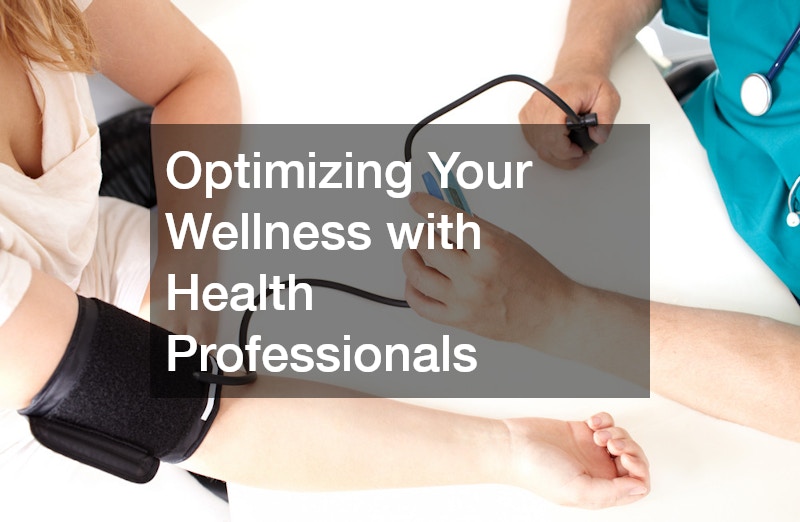
Health is often viewed through the lens of crisis management. We wait for the ache to become unbearable, the vision to blur, or the exhaustion to set in before we seek professional guidance. However, true wellness—the kind that allows you to perform at your peak and age with grace—is not found in the emergency room. It is found in the deliberate, strategic partnerships you build with a network of experts.
Optimizing your wellness requires a shift from a “reactive” mindset to a “proactive” one. It involves viewing your body as a high-performance vehicle that requires specialized maintenance across multiple systems. When you collaborate with professionals, you aren’t just fixing what is broken; you are fine-tuning your biology for longevity, mental clarity, and physical resilience. This guide explores how to assemble your “wellness board of directors” to ensure every facet of your health is operating at its highest potential.
The Foundation of Your Wellness Strategy

At the heart of any sophisticated health plan is a central coordinator. This professional acts as the gatekeeper of your medical history, ensuring that the data from various specialists is synthesized into a coherent narrative. Establishing a relationship with a primary doctor is perhaps the most significant step you can take toward long-term stability. This partnership allows for the tracking of metabolic markers, hormonal shifts, and cardiovascular trends over decades rather than months.
- Audit Your Biometrics: Schedule an annual physical that goes beyond the standard blood pressure check. Request comprehensive panels that include Vitamin D levels, fasting insulin, and a full lipid sub-fractionation to see the real story behind your cholesterol.
- The Power of Longitudinal Data: By seeing the same physician year after year, you establish a “baseline.” What might be considered “normal” for the general population could be an outlier for you. Consistency allows your provider to catch subtle drifts in your health before they manifest as disease.
- Coordinated Specialist Oversight: Use your lead physician to filter and interpret advice from various specialists. This prevents conflicting treatments and ensures that a change in one area—such as a new blood pressure protocol—doesn’t negatively impact your bone density or cognitive clarity tracked elsewhere.
While the physician provides the strategy, the local pharmacy serves as the tactical hub for your daily health routine. Modern pharmacists are among the most underutilized assets in the healthcare system. They offer a wealth of knowledge regarding nutrient depletions—for instance, how certain common medications might be draining your magnesium or CoQ10 levels.
- Medication Synchronization: Work with your pharmacist to align all your refills to a single day each month. This reduces the mental load of health management and ensures you never miss a dose of a critical supplement or medication.
- Consultation over Commerce: Treat your pharmacist as a clinical consultant. Ask about the bioavailability of different supplement brands or the best time of day to take specific nutrients to maximize absorption and minimize stomach upset.
- Access to Specialized Compound Care: Inquire about compounding options if standard doses of a supplement or medicine cause side effects. Pharmacists can often create customized formulations that exclude specific allergens, dyes, or fillers that might be triggering a sensitive inflammatory response in your gut.
Enhancing Sensory Input and Neurological Health
We experience the world through our senses, and the eyes are the most data-intensive organ we possess. Maintaining high-level eye care is about more than just reading the bottom line of a chart. It is about monitoring the health of the blood vessels and nerves in the back of the eye, which can provide early warnings for systemic issues like hypertension or neurological changes.
- The Digital Eye Strain Protocol: If you spend more than four hours a day in front of a screen, ask your provider about the 20-20-20 rule and whether you need specific coatings to reduce glare and high-energy visible light.
- Retinal Imaging: Opt for advanced digital retinal scans during your exams. These images create a permanent record of your eye’s internal structure, allowing for side-by-side comparisons in future years to detect the earliest signs of macular degeneration or glaucoma.
- Contrast Sensitivity Testing: Request an assessment of how well you distinguish objects against a background in low-light conditions. This is often a better predictor of visual performance in the real world than a standard letter chart and can help professionals recommend specific lifestyle or nutritional interventions for night vision.
Once your clinical health is assessed, the focus shifts to functional optimization. For many, this means investing in high-quality prescription eyewear that is tailored to their specific lifestyle. Modern lens technology has evolved far beyond simple vision correction; it can now be customized for specific focal lengths, such as the distance between your eyes and a computer monitor or the dashboard of a car.
- Task-Specific Lenses: Consider having a pair of glasses dedicated solely to your primary work environment. Office-specific lenses can reduce neck strain by providing a wider intermediate field of vision than standard progressives.
- Ultraviolet Protection: Ensure that every pair of glasses you wear—including clear lenses—provides 100% UV protection. Cumulative sun damage to the eyes is a primary driver of cataracts later in life.
- High-Index Material Optimization: If you have a strong correction, discuss high-index materials that reduce lens thickness and weight. This prevents the “nose bridge fatigue” and headaches associated with heavy frames, making it more likely that you will wear your correction consistently throughout the day.
Structural Alignment and Functional Movement

The physical frame requires constant attention to combat the sedentary nature of modern life. A chiropractor plays a vital role in this by focusing on the relationship between the spine and the nervous system. When the spine is properly aligned, the communication between your brain and your limbs is unhindered, which can improve everything from digestive function to athletic recovery.
- Postural Restoration: Use your sessions to address “Tech Neck” and other postural imbalances caused by habitual slouching. An aligned spine reduces the mechanical stress on your ligaments and muscles.
- Nervous System Regulation: Many patients find that regular adjustments help shift their body from a sympathetic (fight-or-flight) state into a parasympathetic (rest-and-digest) state, aiding in stress management and sleep quality.
- Ergonomic Integration Advice: Ask for a specific review of your workplace ergonomics during your visit. A professional can provide precise measurements for your chair height and monitor tilt that complement your spinal adjustments, ensuring that your office habits don’t immediately undo the benefits of your session.
Complementary to spinal alignment is the science of movement. Engaging in physical therapy is not something that should be reserved for post-surgery recovery. Instead, it should be used as a “pre-habilitation” tool to identify movement compensations. A therapist can analyze your gait or your squat mechanics to find muscles that are “sleeping” and others that are overworking.
- Customized Mobility Flows: Work with your therapist to develop a 10-minute daily routine that targets your specific “sticky” areas—typically the hips, thoracic spine, and ankles.
- Core Integration: Beyond just “doing crunches,” a therapist teaches you how to use your deep core stabilizers to protect your lower back during everyday activities, like lifting groceries or picking up a child.
- Proprioception Training: Incorporate balance and spatial awareness drills into your routine to improve your body’s “mapping” in space. This high-level neural training reduces the risk of accidental falls and improves athletic agility by sharpening the communication between your brain and your connective tissues.
Systemic Health Through Oral Care

The mouth is the gateway to the rest of the body. Science has increasingly shown a direct link between oral inflammation and systemic conditions like heart disease and Alzheimer’s. Utilizing comprehensive dental services is an essential part of a longevity-focused lifestyle. This includes checking for signs of sleep apnea, which a dentist can often detect by looking at the wear patterns on your teeth or the size of your airway.
- Inflammation Screening: Ask your dentist to perform a periodontal pocket exam at every checkup. Deep pockets are a breeding ground for bacteria that can enter the bloodstream and trigger systemic inflammation.
- The Airway Connection: If you suffer from daytime fatigue, discuss your sleep quality with your dentist. They may be able to provide oral appliances that keep your airway open at night, significantly improving your oxygen saturation and energy levels.
- Salivary Diagnostic Testing: Explore modern salivary tests that measure specific bacterial pathogens or inflammatory cytokines. This data allows for a highly personalized approach to oral wellness, identifying if you are genetically predisposed to certain types of decay or gum issues before they become visible.
While the dentist looks at the “big picture,” the hygienist provides the essential maintenance through regular teeth cleanings. These visits are the only way to remove tartar (calculus) that has mineralized on the teeth, which cannot be removed by brushing or flossing alone.
- Biofilm Management: Think of professional cleaning as a “reset” for your oral microbiome. By removing the harmful bacterial biofilm twice a year, you prevent the chronic immune response that leads to gum recession and bone loss.
- Personalized Home Care: Use your cleaning appointment to get a critique of your home technique. Your hygienist can show you exactly which spots you are missing and recommend the specific type of interdental brush or water flosser that fits your unique tooth spacing.
- Remineralization Therapy: Discuss the application of professional-grade varnishes or calcium-phosphate treatments during your cleaning. These therapies strengthen the enamel at a molecular level, reversing early “white spot” lesions and making the teeth significantly more resistant to the acidic challenges of a modern diet.
Protecting the Body’s Largest Organ
Your skin is your primary interface with the environment and a major component of your immune system. Seeking out dermatology services is a vital part of a preventative health regimen. Beyond checking for suspicious moles, a dermatologist can help you optimize the skin barrier, which prevents allergens and pathogens from entering the body and keeps moisture in.
- The Annual Skin Audit: Once a year, undergo a full-body skin check. This is a non-invasive way to ensure that any changes in pigmentation or texture are addressed before they become serious.
- Barrier Repair and Protection: Instead of following generic skincare trends, get a professional analysis of your skin type. Using the wrong products can cause “inflammaging”—a state of chronic low-grade inflammation that accelerates the aging process of the skin.
- Photodynamic Therapy Awareness: Ask your provider about advanced light-based treatments that can clear up “precancerous” sun damage across large areas like the face or scalp. This proactive approach clears the slate of sun damage before it has the chance to develop into more complex dermatological issues.
Finally, we must consider the scalp and hair, which are often indicators of internal health. When you consult with hair specialists, you are looking at more than just aesthetics. Hair thinning or scalp irritation can be the first sign of hormonal imbalances, iron deficiencies, or extreme psychological stress.
- Scalp Health is Skin Health: A healthy head of hair begins with a healthy scalp environment. Professionals can offer treatments to clear follicle-clogging debris and improve local circulation.
- Nutritional Support: Experts in this field can recommend specific amino acids and minerals—such as biotin, zinc, and saw palmetto—that support the keratin structures of the hair from the inside out.
- Micro-Inflammation Control: Work with an expert to identify if environmental pollutants or harsh styling products are causing sub-clinical inflammation around the hair follicle. Reducing this “silent” stressor can significantly extend the growth phase of your hair and improve overall hair density over time.
Integrating the Expertise

Optimizing your wellness is a multifaceted endeavor that requires a high level of personal agency. By surrounding yourself with a dedicated team of professionals, you transition from being a passive recipient of healthcare to an active participant in your own vitality. Each specialist provides a piece of the puzzle—from the structural alignment of your spine to the microscopic health of your oral microbiome.
The goal is to create a feedback loop where information from your primary doctor informs your movement patterns, and your sensory health supports your cognitive performance. This integrated approach ensures that you aren’t just living longer, but living better, with the energy and physical capability to enjoy every year. Start small by booking the appointment you’ve been putting off, and begin building the foundation for a more resilient, optimized version of yourself.